Showing posts with label Bible Studies查经. Show all posts

Friday, April 4, 2025

NEW! NEW! Sunday Gospel Channel on You-Tube

Our SUNDAY GOSPEL CHANNEL is now officially launched.

Exciting News.  By the grace of God, we are launching a Sunday Gospel Channel on you-tube to proclaim the Name of Yahweh and to preach the Gospel by directing people to the one God Yahweh and Jesus Christ the Messiah.  Remember us in prayer that the Name of God be glorified and that you will also join us to share this channel with your friends, families, and colleagues.  Let us join hands together to make God's Name known to the world that they can come to have salvation through His Son, the Messiah Jesus. 


< Sunday Gospel频道 >  现已正式开通。

这是令人兴奋的消息。 承蒙神的恩典,我们在 YouTube 上推出周日福音频道(Sunday Gospel Channel),宣扬雅伟的名字,并引导人们信奉唯一的神雅伟和他所膏立的弥赛亚耶稣基督,从而传播福音。 请在祷告中记念我们的事工,愿神之名得着荣耀,愿您也能关注我们,与您的朋友、家人和同事分享这个频道。 让我们一起携手让世界知道神的名字,使他们可以透过神的儿子弥赛亚耶稣领受救恩。

👥


Wednesday, October 2, 2024

Neapolis, the Port Town 尼亚波利 (现称 卡瓦拉)

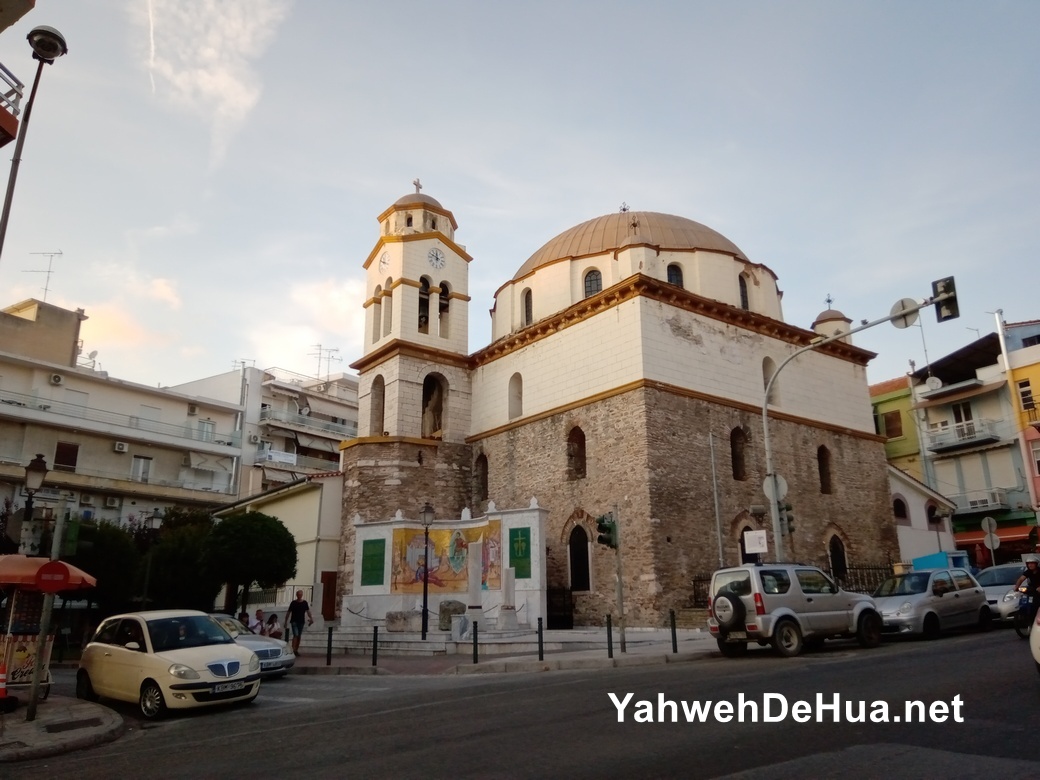
 Neapolis, the ancient port where Paul first came to European soil, is now called Kavala. 

尼亚波利(Neapolis)是保罗首次踏上欧洲土地的古老港口,现称为卡瓦拉(Kavala)。


Byzantine Fortress


At one time in the last century, after the Greco-Turkish war (1919-1922), it ranked as the 4th largest city, due to the large number of refugees. Now it is one of the many smaller cities in Greece, with close to 60,000 residents in the greater municipality area.

It is a small fishing city, underdeveloped, most famous for its tobacco industry, and has an oil producing rake out in the sea. Few tourists come here except Christian tourist groups on their way to ancient Philippi. There is a church of St. Nicholas with large mosaics to commemorate that event. 

由于希腊与土耳其战争(1919-1922)后,大量难民涌入,该市一度成为希腊第四大城市。现在,它是希腊众多小城市之一,整个市区内拥有近 60,000 名居民。
这是一个不发达的渔港,以烟草业和近海石油开采点而闻名。除了前往古代腓立比的基督徒旅游之外,鲜有游客来到这里。有一座圣尼古拉斯教堂,上面有纪念保罗到此地的大型马赛克。
Church of St Nicholas


Mosaic commemorating Paul's landing


It is 160 km west of Thessaloniki, an hour and a half drive. There are a few points of interest, the archaeological museum, the Byzantine Fortress, and the Roman Aqueduct (1st - 6th Century).

位于帖撒罗尼迦以西160公里处,一个半小时和​​车程。这里有几个景点:考古博物馆、拜占庭堡垒和罗马引水道(1 - 6 世纪)。

Via Egnatia


Roman Aqueduct


Saturday, February 17, 2024

#1 Who Do You Say That I Am? (New Series on Jesus the Messiah)

 Who Do You Say that I am?


Towards the end of Jesus’ ministry, he asked two critical questions to his disciples while they were in the northern Judean region of Caesarea Philippi. This event marked the beginning of Jesus’ final journey to Jerusalem. 

 1)   “Who do people say that the son of man is?” (Mt 16:13; cf. Mk 8:27; Lk 9:18))

 2)    “Who do you say that I am?” (Mt 16:15; Mk 8:29; Lk 18:20)


These are relevant questions as the context of Matthew 16 tells us that Jesus was warning the disciples of the leaven of the Pharisees and Sadducees. Apparently, there had been a lot of false teaching going on about Jesus already at that time. The same is true today in the 21st Century.

1) The first question Jesus asked is more of an information kind as to what the crowd is currently saying about Jesus. What is the popular opinion of Jesus? Notice that Jesus specifically uses the title “son of man” in phrasing his question.

2) The second question is more direct and distinctly personal. No titles are used here. The disciples need to come to terms on their own regarding the person of Jesus.


What answers would you give to Jesus if he were to ask you these two questions today?  

1)  To answer the first question, the popular opinion in Christian circles is that Jesus is God, the divine Savior. He is the begotten son of God who came to die on the cross for the sins of the world so that we can have eternal life. Jesus is the second member of the triune God, God the Son.

2) As for the second question (Who do you say that I am?), most Christians have never answered this question. Isn’t this strange? We have done a lot of Bible studies on how Peter answered this question, but that is Peter’s answer. Have you realized that you have never really answered this question yourself? Jesus’ question is directed to you.  What is your answer to him?


Let’s look at the Gospel account to see how the disciples answered Jesus’ two questions:

1)     Some say that Jesus is John the Baptist, others say Elijah, and others say Jeremiah or one of the prophets. (Mt 16:14)

2)     Peter’s answer is: “You are the Christ, the Son of the living God.” (Mt 16:16)

Note that the public opinion of Jesus varies, whereas Peter’s confession of Jesus is true to the core as the revelation comes from the Father. (Mt 16:17)

In the backdrop of all the confusion and false teachings about Jesus, Peter’s proclamation is an important statement of faith – Jesus is the Christ, the Son of the living God. This event marks the turning point for Jesus, as from thereon, he starts foretelling his suffering, death and resurrection. This incident is recorded in all 3 Synoptic Gospels (Mt 16:13-20; Mk 8:27-30; Lk 9:18-20).

We have heard many sermons on this passage of Peter’s confession of faith. In my time, I have preached and led many Bible studies on this passage to different groups. There is an important application of this passage that all Christians need to face regarding their own faith: Who is Jesus?

 What is your answer? Who is Jesus? This blog is going to be short because I want you to pause to answer Jesus’ question: “Who do you say that I am?” Is your answer going to be based on the popular opinion of the Nicene creed that Jesus is God, God the Son? Or is your answer going to be like that of Peter that Jesus is the Christ, the Son of the living God? If so, what does it mean to you that Jesus is the Christ, the Son of God?

You need to come up with your own conviction to examine where your faith is built upon.  Most Christians build their faith on “an idea of Jesus” from what others tell them, or what the churches tell them, or even what the apostle Peter tells them. This is not good enough as all this is just head knowledge. You must come to have faith in Jesus as to who he is from a first-hand experience. You need to answer this question personally yourself with full conviction of who Jesus is to you. Do not quote others. What is the Father revealing to you regarding the identity of Jesus? Write to me and let me know your answer. [1]


FROM A PASTOR'S HEART

In graduate school, I took a few courses on Christology as I wanted to understand more about the person Jesus and his life. To my surprise, I discovered that a lot of academic debates have been going on to grapple with the greatest puzzle of modern Biblical scholarship – the question of the “real Jesus.” Today, lots of historical research is going on by Catholic priests, scholars, historians, and theologians regarding the  Jesus of Nazareth who lived in the 1st Century era. Most evangelical churches remain silent on this topic because of adherence to the Niceno-Constantinopolitan Creed that is deeply rooted in their Church constitutions. Any pastor doubting the deity of Jesus will be written off as a heretic. For this reason, I, too, fell into this trap in not wanting to touch on this sensitive topic. Who wants to sound like a skeptic in doubting the deity of Jesus?

While this topic is silent in the churches, there has still been an ever-growing maze of literature on Jesus in the last twenty years – more than ever before! As a result, the study of Jesus has gained an incredible amount of attention in Biblical scholarship today, to the point that reading all of them would take a lifetime. This just shows how crucial this topic is so that people can come to grips with the true identity of Jesus.

It is time for you to write your short thesis regarding Jesus’ question:  “Who do you say that I am?” You must seriously examine and re-evaluate whether your faith in Jesus is founded in the Bible alone.  While we need to keep abreast of the myriad research projects that have been done in current biblical scholarship, we need to come to our own conclusion in our quest to answer Jesus’ question: Who do you say that I am?

Your answer to this question must come with deep conviction with revelation from God just as it did for Peter. Academic studies will give you information. Spiritual revelation comes from God and not from theology. “Who do you say that I am?” You need to answer Jesus. No one else can do it for you. When it comes to this central question, no substitutes will do.

More than 2000 years ago, Paul warned about people who would come and preach “another Jesus” (2Cor 11:4). Evidently, some in the apostle’s day had already, and so soon, fallen into the trap of the enemy by believing “another Jesus.” If we so love Jesus, let us do some hard work to examine whether our faith is in “this Jesus” that was preached by the early apostles (Acts 1:11; 2:32; 4:11; 17:3).


[1] I can be contacted at via this email address:  YahwehDeHua@gmail.com


Wednesday, February 7, 2024

Troas in New Testament 特罗亚

The word Troas (G5174) is used 6 times in the New Testament, 4 times in Acts (twice in Acts 16, twice in Acts 20), once in 2 Cor 2:12, once in 2 Tim 4:13).

Acts 16 is the account of the Second Missionary Journey.

2 Cor 2 could be the outward portion of the Third Journey after the riot in Ephesus (Act 19) and Paul went to Macedonia (Act 20:1), and upon the return leg of the same journey, by that time, we read that there was a congregation in Troas. Paul together with the team stayed in the city with the church (Acts 20:6-12). 

It took them 5 days to sail from Philippi to Troas (Act 20:6). 

In 2 Timothy, Paul's last epistle, Paul was in Rome, writing to Timothy who was in Ephesus. And Paul asked Timothy to come to visit him and to "bring the cloak that I left behind in Troas with Carpus, and the scrolls, especially the parchments" (2 Tim 4:13).

Again, it shows that Troas was at the crossroads from Asia to the west.


------

特罗亚这个名字(G5174)在新约圣经中使用了6 次,在使徒行传中使用了4 次(使徒行传16 章两次,使徒行传20 章两次),哥林多后书2 :12 一次,提摩太后书4:13 一次)。

使徒行传第 16 章记述了第二次宣教旅程。

林后2章可能是在以弗所骚乱之后(徒19),保罗前往马其顿(徒20:1)。之后第三次旅程的回程部分,那时我们读到在特罗亚已经有一个教会聚会点。保罗和他的团队一起留在城里的教会(徒20:6-12)。

他们花了五天时间从腓立比航行到特罗亚(徒 20:6)。

在保罗的最后一封书信《提摩太后书》中,保罗在罗马写信给以弗所的提摩太。保罗请提摩太来看他,"我在特罗亚留于加布的那件外衣,你来的时候可以带来,那些书也要带来,更要紧的是那些皮卷。"(提后4:13)。

这再次表明特罗亚处于从亚西亚到西方的十字路上。

👸👲

Monday, February 5, 2024

The "WE" passages in Acts 《使徒行传》中的"我们"

Many people are aware that in writing the accounts in Acts of the Apostles, the author started with the third-person stance, and some chapters further down, switched to a first-person plural "we".

The first instance happened here in Acts 16.


Paul had a vision at night of a Macedonian man, pleading for him "Come over to Macedonia and help us!" (Acts 16:9) The pleading "Come over" was in the singular tense.

Paul must have retold the vision to his companions, "when he had seen the vision, we wanted at once to go away to Macedonia, concluding that God had called us to proclaim the good news to them." (Acts 16:10)

This is the first time of the WE passages, including the author Luke in the mission team. This first-person record adds dynamics, life, and involvement to the description.

There is also an important lesson for us to learn, how the early disciples turned a single man's vision encounter into a team decision and action.

They must have been praying for divine direction of what to do next.

Then the vision came.

Then Paul told his experience.

The group concluded that this was a calling from God for the whole team.

This shows the oneness of heart and mind, putting aside all personal individual preferences.

Note also the word "immediately (at once)". This shows the urgency and readiness of the team.

All for one and one for all! 


That's the way to go!

😎😍

-------

很多人都知道,《使徒行传》的作者在写作时,是从第三人称开始的,往后的一些章节,改用了第一人称复数「我们」。


第一个例子发生在使徒行传第 16 章。


保罗在夜间看到一个马其顿人的异象,为他恳求“请你过到马其顿来帮助我们!” (徒16:9)「请你过到」的恳求是用单数时态。


保罗一定向他的同伴复述了这个异象,“保罗既看见这异象,我们随即想要往马其顿去,以为神召我们传福音给那里的人听。” (徒 16:10)


这是第一次用"WE我们",包括作者路加在传道团队中。这是以第一人称记录,为描述增添了动态、生命力和参与度。


我们还需要学习一个重要的教训,早期的门徒如何将一个人的异象遭遇,转变为团队的决策和行动。


他们一定一直在祈祷下一步该做什么的神圣指示。


然后异像来了。


然后保罗讲述了他的经历。


小组的结论是,这是神对整个团队的呼召。


这显示心灵和思想的合一,抛开所有个人的个人喜好意见。专注在从神而来的使命上。


另请注意“随即(立刻)”一词。这显示了团队的紧迫性和准备状态。


人人为我,我为人人!

这是要踏上征途!

Monday, January 16, 2023

在圣灵里作运作 Functioning in the Spirit

我们可以再看看保罗决定去腓立比。然后我们就能明白一个属神的人如何下定决心,并在圣灵里运作的过程


1. 保罗的使命

在大马色路上的异像中,耶稣在异像中告诉保罗“你所当行的事必指示你”。

在给亚拿尼亚的另一个异像中,亚拿尼亚得到了关于保罗的进一步信息:“去吧,因为这个人是我所拣选的工具,要在外邦人、君王和以色列人面前传扬我的名。” (使徒行传 9:15)述保罗早已知道他的呼招是将来要向外邦人传礼福音。


2. 教会会议

在徒 15 号章,耶路撒冷教会会议得出结论,除了 4 个具体建议外,外邦信者不必遵循犹太人习俗。这一 个集体的决定,为在外邦人中传福音扫清了不必要的障碍。


3. 耶稣的灵的引导

徒16一直说明当时使徒们的经历。耶稣的灵引领着他们走每一步。


4. 属灵异象:

现在使徒们来到特罗亚,保罗对他生命中,经历了一个新阶段,他收到了新的异象。他得到亮光要前往外邦地区,主要是为了接触非犹太人。

请注意,异象的信息是“帮助我们!”,这是个众数的代名词。


这为保罗和他的团队前往马其顿开辟了一条清晰的道路。团队对此持积极态度。

“他看见异象,我们就想立刻动身往马其顿去,以为上帝呼召我们向他们传福音。” (使徒行传 16:10)


注意:

1. WE:这是保罗对整个团队的异象。我为人人,人人为我。他们的结论是:“上帝呼召了我们……”,不仅仅是保罗一个人。

2. AT ONCE:或立即 (εὐθέως eutheōs G2112)。这是他们热心的表现,一旦他们明白神的旨意,他们就立即付诸行动。他们已经准备好了,不需要拖延或作下一步的准备或调查。


Wednesday, January 4, 2023

福音怎样传给外邦人呢?How was the Gospel First preached to the Gentiles?

那么是福音怎样传给外邦人呢?

在使徒行传中,我们读到有外邦人改信神了。


(一)

在使徒行传 8:26ff 中,腓利在从耶路撒冷到加沙的路上得到一个异象,向埃提阿伯(即古实)太監传道。这埃提阿伯人显然是一名改信神的外邦人……


(二)

然后在使徒行传 10:1ff 中,彼得也得到一个异象,向该撒利亚的百夫长哥尼流传道(他也是外邦人归信神的人)。结果记录如下:

使徒和在犹太的众弟兄听说外邦人也领受了神的道。 (使徒行传 11:1)


(三)

在使徒行传 11:19ff 中记载:

19 那些因司提反的事遭患难四散的门徒直走到腓尼基和居比路,并安提阿;他们不向别人讲道,只向犹太人讲

20 但内中有居比路和古利奈人,他们到了安提阿也向希腊人(Hellenists )传讲主耶稣(有古卷作:也向说希腊话的犹太人传讲主耶稣)。

21 主与他们同在,信而归主的人就很多了。

由于 v20 原文没有具体说明希腊人是说希腊语的犹太人,还是说希腊语的外邦人。我们不能从这节经文得出任何结论。如果他们是外邦人,那么他们很可能被安提阿的教会所吸引。

但同一词 (Ἑλληνιστής Hellenistes G1675) 在使徒行传 6:1, 13:29 中使用,编辑/翻译者(例如 LEB、HCSB、NASB)在那里将其解释为“说希腊语的犹太人”。


(四)

在安提阿教会的5位先知和教师中,有一位名叫尼结的西面(Simeon, called Niger),这个昵称可能表明西面是:

① 中东的犹太人,但他肤色较深,或

② 可能是非洲犹太人,例如埃塞俄比亚犹太人,或 

③ 可能是非洲人 血统,因为拉丁词的意思是“黑色”。在这种情况下,他可能是外邦人。


(五)

对于第一次宣教旅程和第二次旅程的前部分,尽管使徒们在外邦的土地上往来,但他们总是先在会堂里布道。 (徒13:5, 14)

福音首先传给犹太人,然后绕道传给附近的外邦人。然而,当保罗和巴拿巴被犹太人同胞拒绝时,他们在优先次序上采取了调整:“保罗和巴拿巴放胆说:神的道先讲给你们原是应当的;只因你们弃绝这道,断定自己不配得永生,我们就转向外邦人去。因为主曾这样吩咐我们说:我已经立你作外邦人的光,叫你施行救恩,直到地极。” (使徒行传 13:46-47)


Monday, January 2, 2023

在夜间有异象 Vision in the Night

在夜间有异象现与保罗。有一个马其顿人站着求他说:“请你过到马其顿来帮助我们。”

保罗既看见这异象,我们随即想要往马其顿去,以为神召我们传福音给那里的人听。 (使徒行传 16:9-10)

source = http://www.my-favourite-planet.de/images/europe/greece/macedonia/veria/veria_dj-03082004-3043b_apostle-paul-vision-mosaic.jpg


保罗和他的一小群宣教士团队来到特罗亚时,上述的记载是他们在那里活动的唯一记录。


特别的事件,是保罗在夜间看到了异象


我不太确定为什么指它是一个异象而不是一个“异梦”。也许保罗还没有睡着,他完全清醒,并看到了异象。


通常当圣经描述异象时,通常在那个时候,那个人是完全清醒的。对于异梦,这个人是睡着了。


神说一次、两次,世人却不理会。人躺在床上沉睡的时候,神就用梦和夜间的异象(约伯记 33:14-15)。(Indeed, God speaks in one way, even in two,  yet someone does not perceive it. In a dream, a vision of the night, when a deep sleep falls on men slumbering on their bed. )


“梦是夜晚的景象” (Dream = Vision of the Night)

保罗是不是睡着了并非重点,重要的是他知道神在异像中对他说话

异象里的景象,是看到一个男人,马其顿人(希腊人),请他来帮助他们。

马其顿在今天的希腊北部。它是亚历山大大帝的故乡。


让我们回顾历史

  • 在古代时期(公元前 6 世纪之前)小亚细亚的西海岸也是希腊人的聚居地,被称为爱奥尼亚(Ionia)。
  • 然后随着波斯帝国的发展,居鲁士大帝于公元前 547 年征服了希腊人居住的爱奥尼亚地区。
  • 在古典时期(公元前 5 世纪和 4 世纪),希波战争仍在继续。波斯人将从东方出发,一路向西,来到特罗亚地区,然后穿越赫勒斯滂海峡(Hellespont)向西进发。
  • 公元前334年,亚历山大大帝力挽狂澜,同样渡过赫勒斯滂海峡,来到特罗亚半岛,然后向东进发,最终征服了波斯帝国。
  • 然后开始了300年的希腊化文化


特罗亚是东西方的交汇点。

这个异象的重要之处,在于它是关于马其顿的。在犹太人眼中是一个外邦人。这个呼召是专门针对希腊人的,这是一个非犹太人的族群。


这标志着一个新开始

今天大多数基督徒都是非犹太人。只有一小部分是犹太信徒,弥赛亚信徒(全世界 24 亿基督徒中约只有 350,000 人,约占 0.014%)。

我们通常不会对传教工作或接触非犹太人,会感到有任何不寻常的事情。我们今天认为,福音是应该传给所有国家和所有种族,这是理所当然的。


但在使徒行传的时代,情况并非如此。早期基督徒走到这个阶段,在发展上经历了很多步骤。

也许彼得的话代表了当时犹太人的想法:“你们知道,犹太人和别国的人亲近来往本是不合例的” (使徒行传 10:28)。神借着重复 3 次的异象,向彼得传达一个信息:“神已经指示我,无论什么人都不可看作俗而不洁净的。”(使徒行传 10:28b)。


那么,福音该如何传给外邦人呢?

Saturday, December 17, 2022

异象与使命 Vision and Mission

 当保罗和他的传教士队伍来到特罗亚时,他们正处在这片土地的海岸上。一路上神的灵不许他们往左或右,直走到了路的尽头,接下来该怎么办?

当然,他们可以留在城里传福音。当时特罗亚是一座大城市。

后来有使徒行传20章的记载中,我们可以了解到更多关于这城里的信徒团体; 保罗第三次宣教旅程再来到这里,与城中的信徒聚会。并提到一个年轻人的名字,犹推古,他从窗户掉下来,死了又被保罗救起,活了过来。

我们对这个信徒团体一无所知,不知当地事工是如何开展的。

                                                           +++ +++

当你外出宣教的时候,第一课就是要学会聆听神的声音,跟从神的带领。不是妄自下定论,急于忙于各种活动。

显然,这就是保罗所做的。他在夜间看到了异象

source: https://www.dreamstime.com/hand-holding-piece-jigsaw-puzzle-word-vision-mission-selective-focus-image138846116

异象和异梦是神启示祂计划的方式,不是保罗自己的梦想,也不是他个人雄心勃勃的愿景。

彼得在五旬节引用了约珥的话:“神说:在末后的日子,我要将我的灵浇灌凡有血气的。你们的儿女要说预言;你们的少年人要见异象;老年人要做异梦。"

  • 异象和异梦与圣灵的充满有关。
  • 异象和异梦是人祷告等候的结果。
  • 异像是给少年人的,也许保罗当时在特罗亚斯还没有我们想想般的那么老。
  • 异梦是给老年人的,
  • 异象和异梦都与“预言”联系在一起,先知是神的代言人。

耶和华如此说:"……使你站在我面前;你若将宝贵的和下贱的分别出来,你就可以当作我的口。" (耶 15:19b)

到了日期,借着传扬的工夫把他的道显明了;这传扬的责任是按着神我们救主的命令交托了我。 (多 1:3)

异梦和异像不是为了建立传道人的资历,而是直接关系到宣扬来自神的信息。

Monday, November 14, 2022

保罗来到特罗亚 Paul Came to Troas

 当保罗在第二次宣教旅程时,他当然会记得最初的原因,即宣教的目的是完成神的灵所差遣他去做的事。他可要尽全力配合,完成任务。

因此,当他离开他所建立的联系点时,就是特庇、路司得,以及以哥念和彼西底安提阿。在这些地方之后,他不得不移到新的地域。他接下来应该去哪里?

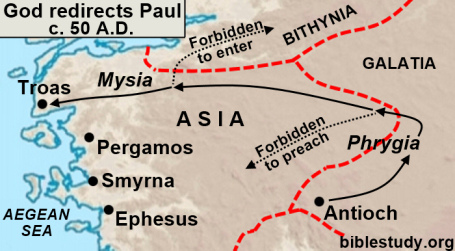
使徒行传 16:6 圣灵既然禁止他们在亚西亚讲道,他们就经过弗吕家、加拉太一带地方。

7 到了每西亚的边界,他们想要往庇推尼去,耶稣的灵却不许。

8 他们就越过每西亚,下到特罗亚去。

(使徒行传 16:16:6-8)

这解释了保罗如何来到特罗亚。


特罗亚城

特罗亚城以亚历山大命名,因此也被称为“亚历山大特罗亚“。

“特罗亚”这个名字是“特洛伊”的一种形式,这地因荷马的《伊利亚特》和《奥德赛》而闻名。这些古老诗讲述了特洛伊城与迈锡尼希腊王国联盟之间长达十年的特洛伊战争的故事。

写作的时间和特洛伊的位置已在历史中消失,实际上许多人将这些诗歌视为传说。这一带都统称为The Troad。

特罗亚原本是一个希腊村庄,后以马其顿的亚历山大大帝命名。它繁荣昌盛,成为新约时代的大城市。

在历史上,凯撒大帝和君士坦丁先后在他们的时代都曾考虑过将特罗亚作为罗马帝国的新首都。大概是因为它的地理位置。它是连接东西方的两座陆桥之一。另一个地方是拜占庭(Byzantium),拜占庭于4世纪最终被君士坦丁选为的新首都。

这是一个战略位置,向北穿过达达尼尔海峡(古称Hellespont,今称 Canakkais Bogazi),长 61 公里,宽 1.2 至 6 公里。

SOurce: https://en.wikipedia.org/wiki/Dardanelles#/media/File:Turkish_Strait_disambig.svg


波斯的薛西斯在 Abydus 和 Sestus 之间架起了一座桥梁西征,该海峡相距 1.5 公里,于公元前 480 年入侵希腊。

而在公元前334年,亚历山大大帝逆势东征,也横渡达达尼尔海峡,最终击败了强大的波斯帝国。

这座城市也是一个海港,连接了三个方向的航运交通,东到亚西亚和黎凡特(今中东),西到马其顿和希腊,东北通过达达尼尔海峡到拜拜占庭和黑海地区,包括比提尼亚和本都。


因此,来到了海边上,下一个目的地是跨海进入马其顿,这是非常合乎逻辑的。

Monday, November 7, 2022

保罗在传教旅程中去了腓立比 Paul was on a Mission going to Philippi

 保罗正在进行传教之旅。

这一切都始于使徒行传第 13 章。

从使徒行传 13 章,我们读到:

1 在安提阿的教会中,有几位先知和教师,就是巴拿巴和称呼尼结的西面、古利奈人路求,与分封之王希律同养的马念,并扫罗。

2 他们事奉主 [雅伟] 、禁食的时候,圣灵说:“要为我分派巴拿巴和扫罗,去做我召他们所做的工。”

3 于是禁食祷告,按手在他们头上,就打发他们去了。

(使徒行传 13:1-3)


这发生在安提阿(今土耳其安塔基亚)的教会。这里曾是塞琉古帝国的首都,后来成为继罗马和亚历山大之后的第三大城市(有学者将其列为第四大城市,仅次于以弗所)。

新约时代,它就是罗马叙利亚省的首府。


安提阿在教会历史中的发展

安提阿是仅次于亚历山大的第二大基督教中心。

自4世纪以来,它是罗马帝国的五个古代宗主教区(Pentarchy)之一:罗马、君士坦丁堡、亚历山大港、安提阿和耶路撒冷。

  • 耶路撒冷在此名单上,更多地是作为一种受尊重的仪式感。
  • 罗马是罗马的首都,君士坦丁堡是在公元 4 世纪加入的,两者都可以出于政治原因而名列单上。无论如何,罗马经常排在第一位,君士坦丁堡排在第二位。这场竞争最终以两地区教会在 1054 年的大分裂(即天主教和东正教之间相互驱逐)而告终。
  • 而其他三位宗主教区则在该地区于 661 年左右被穆斯林接管后,影响逐渐减少。

传教士 - 委派- 使命

我们可以从文中注意到以下几点:

1. 所关注的中心在安提阿(在犹太人的地域之外),而不是耶路撒冷。

2. 安提阿教会有 5 位先知和教师按名字列出。

3. 第一批传教士巴拿巴和保罗是安提阿教会的先知和教师。

4. “圣灵说”,意味着(a)或者通过异像中以可听见的声音传递(b)通过“先知”作为代言人说话,与旧约先知的方式相同。

5. 该消息被按字引用。

6. “分派……去做我召他们所做的工。”可译作:“分别出来……去做我召他们所做的工。” 是委派去完成使命。

7. 巴拿巴和保罗被指示要“分别出来”,这是犹太人最熟悉的另一个希伯来概念:圣洁,即“圣洁”的意思是为了特定目的而被分别出来(古希伯来语词典,vituralbookword. com 出版,Jeff Benner,引自:https://archive.org/details/TheAncientHebrewLexiconOfTheBible/page/n431/mode/2up)。百姓要圣洁,祭司要被宣告“归雅伟为圣”(利 20:26)。

8. 是要完成圣灵差遣他们去做的任务,而不是巴拿巴和保罗自己的任何计划或想法。

9. 因此,宣教团队了解圣灵的指示是很重要的,他们必须学会听从,并跟随圣灵的引导。


Ancient Hebrew Lexicon by Jeff Benner


Friday, October 21, 2022

神开了一扇大门 God opens a Door

在宣教旅程的头部分,保罗重访了他在第一次传教旅程中走过的城市,特庇和路司得,并经过弗里吉亚和加拉太地区。

他们接下来该去哪里?

当他和他的小团队继续前进时,“圣灵既然禁止他们在亚西亚讲道”(使徒行传 16:6),

他们转向北方,“到了每西亚的边界,他们想要往庇推尼去,耶稣的灵却不许。” (使徒行传 16:7)


属灵功课:

  • 神的工作不是指一个随机地点或从精美的旅游指南中选择一个风景如画的地点。
  • 这与实现您自己的梦想和计划无关,更不用说证明自己了。
  • 在我们的属灵生活中,尤其是在做神的工作时,我们都必须学习领受圣灵的引导。
  • 即使你有一个特定的目标,也要学懂专注圣灵。
  • 神的灵可能会对你的所有/或任何计划说:“不”。
  • 不要以为你要事奉神,就得按你的计划和心意去做。
  • 学习祈祷并学习接受从神那里得到一个“不”的答案。
  • 全心全意地接受上帝的“不”。
  • 无论你的前景/愿景多么美好,都不要违背神明确的旨意。
  • 选择跟随神的带领,无论对你来说是多么的困难
  • 根据神的指示马上调整你的计划。
  • 继续关注神的带领

当神关闭一扇门

有句流行的说法,是:“当神关闭一扇门,他会在别处打开一扇窗。”

海伦凯勒说:“当一扇幸福之门关闭时,另一扇门就会打开,但我们经常注目在那扇关闭的门,以至于看不到为我们打开的那扇门。

从使徒行传十六章可以看出,神不只是开了一扇小窗,事实上,他在特罗亚开了一扇大门,带领保罗进入马其顿。


当我们看地图时,我们可以很容易地看到场景,

团队从东南来,往西走。

它们被阻挡往西部(亚西亚)和北部(庇推尼)。


还有什么选择?

  • 他们应该留在神停止他们的地方吗?
  • 他们应该朝着不同的方向前进吗?他们能去哪里?
  • 他们应该撤回加拉太吗?

他们只能往西北走。


于是他们走到了尽头,到了地中海的边缘,来到一座名叫特罗亚的城市。 

Tuesday, October 18, 2022

“腓立比”是什么意思?What is the word "Philippi"?

 “腓立比”这个词是什么意思?

这是一个城市的名字,是处于今天希腊北部的一个地方。在新约时代,它是罗马帝国的一部分,位于马其顿省。

今天的老城是一个考古遗址,2016年被联合国教科文组织列为世界遗产。附近有一个现代的小村,还有人在此居住,小村称为Filippoi(Φίλιπποι,希腊语发音几乎相同),人口谨为 一万多人。

https://en.wikipedia.org/wiki/Philippi#/media/File:Philippi_city_center.jpg


当我们进行单词搜索时(“腓立比”,原文编号:G5375),我们找到更多与腓立比相关的经文,首次是在使徒行传 16:12-40,还有徒20:6,记录了保罗曾多次到访腓立比城,看到圣经给出了保罗与腓立比人的关系的背后故事。

因此,为了更全面地了解,我们的学习不是从腓立比书开始,而是从使徒行传开始。

据徒16章,保罗当时是在他的第二次宣教旅程

这次旅行的主要原因之一是传递耶路撒冷会议的信

“使徒和作长老的弟兄们问安提阿、叙利亚、基利家外邦众弟兄的安。

我们听说,有几个人从我们这里出去,用言语搅扰你们,惑乱你们的心。其实我们并没有吩咐他们。 所以,我们同心定意,拣选几个人,差他们同我们所亲爱的巴拿巴和保罗往你们那里去。这二人是为我主耶稣基督的名不顾性命的。

我们就差了犹大和西拉,他们也要亲口诉说这些事。因为圣灵和我们定意不将别的重担放在你们身上;惟有几件事是不可少的,就是禁戒祭偶像的物和血,并勒死的牲畜和奸淫。这几件你们若能自己禁戒不犯就好了。愿你们平安!”  (徒15:23-40)

耶路撒冷会议的决议方案

这是耶路撒冷教会在外邦人归向神的问题上得出的决议方案,决定外邦人是否必须遵守摩西的律法和割礼的仪式。

经过多次讨论,他们得出结论,摩西律法是传给犹太人祖先,是为犹太人的,外邦人不必遵守,除了以下四项:

  • 禁食祭偶像的食物,
  • 禁戒血(即吃血),
  • 禁戒被勒死的东西(即食用肉应适当屠宰),
  • 禁戒淫乱。

这消除了犹太信徒之间的争论,并为外邦信徒提供了明确的指导。

这为外邦人打开了传福音和归向神的大门。大多数旧约条例(包括割礼)不适用于他们。这确实将注意力集中在属灵方面而不是身体上。诸多“应该做”和“不该做”事项,无疑是人们的一个个难关。

谁愿意学习并遵守犹太人的 613 条诫命?

当外邦人转向唯一的真神时,他们显然不必犹太化。

Monday, October 17, 2022

01 圣经书卷单词搜索 - 何西亚书 Bible Books Word Search - Hosea - Excel Spreadsheet for Download

In this new series of Bible Book Word Search, I would like to help all our readers to search out all words of each book of the Bible, so that we can study the Word of God with clarity and accuracy.

One of the first things we need to do is to search out all the words that occur in the book.

In the coming days, we will systematically search out all the words that occur in each Book of the Bible.


The Method:

1.  All the data will be collected from the YahwehDeHua Website
2.  The final format will be put in an Excel format
3.  An Excel document will be provided for our readers to download at the end of each blog
4.  From there, you can start doing in-depth word studies to find the keywords and key themes of the Book.


Twelve Minor Prophet Books

We will begin with the 12 minor prophet books in the following order:

1. Hosea 
2. Joel 
3. Amos 
4. Obadiah 
5. Jonah 
6. Micah 
7. Nahum 
8. Habakkuk 
9. Zephaniah 
10. Haggai 
11. Zechariah 
12. Malachi 


BOOK OF HOSEA


To do word studies of each book:

Part A:  Collect individual words from the book

Part B Collect word families of the book    (Some individual words are grouped together in family groups)


Part A:  Individual Words of the Book of Hosea

Collect Data from YahwehDeHua Website

Step 1:    Go to: http://yahwehdehua.net/cn/snstats/ot

Step 2:    Choose the book:  Hosea


Hosea has 14 chapters:  From Hosea 1:1 to Hosea 14:9


Step 3:    Scroll to the bottom of the page:


Hosea


1.  Hit "All Hebrew Numbers"

2.  Hit "Submit an enquiry"


Step 4:    The data will appear on this page

Hosea


This page is very long, so I show you only part of the page from the top.

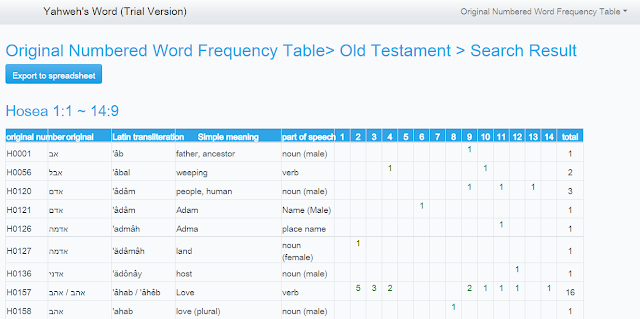
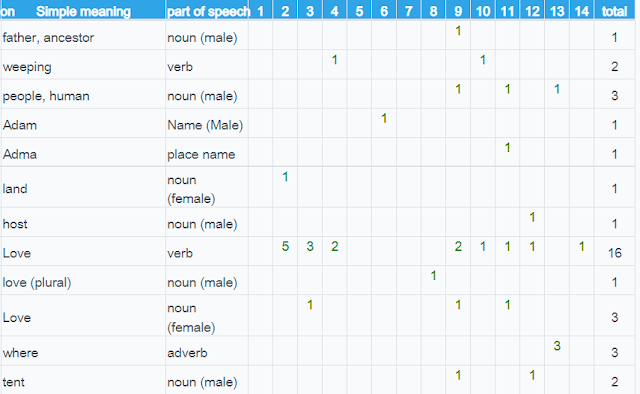
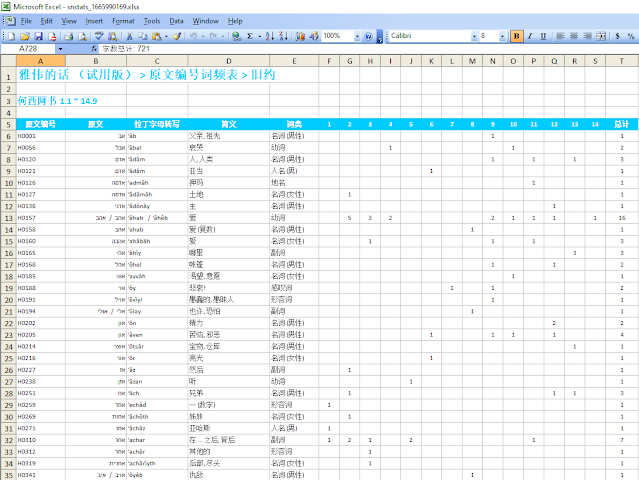
1.  All the words are listed in the order of Strong's Numbers of Hebrew words

2.  If you look closely at the data even in these few words, you can see that the word "love" which is a theme of Hosea occurs 16 times.


Hosea


The table also shows you how the word "love" is spread through the 14 chapters of Hosea.
- the most occurrence of "love" is 5 times in Hosea Chapter 1.
- or we can group them together that "love" occurs from Hosea 1-3 and Hosea 9-13
etc.

This gives you an idea of where the keywords are located and in which chapter or sections inside the book.


Step 5:  Export to Spreasheet

Hosea


Click to "Export the spreadsheet": Excel format:

Voila!


Hosea


I will attach the Excel Spreadsheet for you to download onto your computer.


Once you have the Excel spreadsheet, you can do anything you want to find the information you want in terms of word frequencies, word occurrences of each chapter, the spread of the word in the book, the theme of each chapter, and the theme of the book.

Of course, word studies is only a start in exegesis. Context is most important when it comes to looking for themes in the book. You need to find not only individual words but how the words are used in the context of the chapter, the section, and the entire book.

Learn to look for "Key Phrases".  The Key phrases will direct you to the theme of the Book.  For Key phrases, you need to read the entire book at one sitting to grasp the whole context.  What I do is that in the next 14 days, I read the entire book once each day in prayer to absorb the message that God wants to speak to me.


Here are the 50 most frequent words of Hosea:


The larger the word, the higher the frequency:

- YHWH   -  46X
- Israel      -  44X
- Ephraim  - 37X
- God         - 26X

Looking at the words will give you an idea of some of the themes in the book.


Of all the prophets in the OT, Hosea pays special attention to Ephraim:


Hope you have enjoyed today's blog.

Feel free to give me your feedback,
Rosa

PS  I will do Part B in the next post and take you step by step!


-----------------------------

01 圣经书卷单词搜索 - 何西亚书 - Excel电子表格下载


一新的圣经书单词搜索系列中,我想帮助者借着搜索出圣每一本的每个单词,好清晰准确地考神的话语 

在接下来的日子里我会系统地在每本圣经书搜索所有出现的单词


The Method 方法:

1.       所有数据均来自雅伟的话语网站YahwehDeHua Website

2.      最终将以Excel 格式呈现

3.      每篇博文的末尾都会提供Excel文档供读者下载

4.      Excel那里您可以开始筛选进行深入的单词查考以找到该书的关键词和关键主题


十二卷小先知书


我会以下的顺序从12卷小先知书开始:


1. 何西亚书

2.

3. 阿摩西书

4. 俄巴底亚书

5.

6. 弥迦

7. 鸿书

8. 哈巴谷书

9. 西番雅书

10. 该书

11. 撒迦利亚书

12. 玛拉基书


何西亚书


 每一书卷进行单词查考:

 A 部分从书中搜集单词 (single words)

 B 部分搜集书中的字系  (word family) ( 有些单词是合在一系)


A部分何西亚书的单词

从 YahwehDeHua 网站收集数据

 第一步: 《》网站 http://yahwehdehua.net/cn/snstats/ot

 第二步选书卷何西亚书


何西亚书一共有14:从 何西亚书1:1  到  何西亚书14:9


 第三步滑到页面的底部:


1.  

 1. 点击希伯来文全部

    2.  "提交查询"


第四步数据会显示在这页面


这个页面很长我只是给您展示了页面的顶端部分 

 1.  所有单词是以《史特朗经文彙编希伯来语原文编号顺序列出

 2.  你仔细观察这几个词的数据你会发现作为何西阿其中之一主题关键词:这个词在这里出现了 16


該表还向您展示这个字是如何分布在何西亚书的14章书里的

  • 的出现次数最多是在何西亚书第一章一共5
  • 或者,我们可以将它们归纳一下这个字出现在何西亚书的1-3章和9-13 

等等


这样就让您可以了解关键词的位置以及在书中哪些章节曾出现过


第五步导出电子表格


点击汇出至试算表” :输出excel 格式


我将附上Excel电子表供您下载到您的电脑上


 ==> 您只需在此点击下载何西亚书单词Excel电子表!!

好好享用!!


一旦您有了这Excel电子表格您就可以随意地做许多事情来分析您想要的关于单词的信息包括出现的字频率在书中每章节的出现与分布情况每章书的主题关键词和全书的主题关键词


当然字意查考仅仅是释经的开端要找到书的主题上下文的联系是最重要的您不仅要找出单个单词您还要找出这些单词在章节段落乃至整本书的上下文中如何使用


学习找出关键短语(Key Phrases)关键短语将会引导您书的主题而这关键短语需要您一口气读完整本书以致掌握全书的上下关联我会在接下来的14天里 每天都在灵修时间中读整本书一遍以吸收神想对我说的信息


这是何西亚书中50个最常见单词


字体越大的单词就是越常见的单词


- YHWH   -  46X

- Israel      -  44X

- Ephraim  - 37X

- God         - 26X


留意这些单词会让您对书中的一些主题有所了解


在旧约所有的先知中何西亚特别关注以法莲


希望您喜欢我今天的博文


欢迎您给我回馈哦!!


另外我会在下篇文章中写 B部分带您一步一步来


04 在十字架下:十堂人生課!第4課: 十字架上最后的试探 , 究竟其毒钩何在?(受难日信息 & 复活节信息)

  在《立于十架》第四部中,我们直面一个令人震撼的事实:十字架不仅是牺牲之地,更是耶稣所受最大试探的现场。当士兵、宗教领袖、罪犯和群众的讥讽如合唱般响起,他们将 “神的儿子”、“以色列的王”、“基督”等弥赛亚头衔掷向耶稣,并挑衅他通过救自己、从十字架上下来来证明身份。这并非随意的...